
As organizations increasingly rely on data-driven decisions, maintaining accurate, consistent, and reliable data has become essential. Missing values, duplicate records, and schema inconsistencies can affect analytics and operational workflows. This article explores the importance of data quality monitoring, its key challenges, essential metrics, and how Data Monitor AI provides a centralized approach to understanding database health.
The Importance of Data Quality Monitoring: Building Reliable Data with Data Monitor AI
Introduction
Data has become one of the most valuable assets for modern organizations. Businesses rely on databases, analytics platforms, and data pipelines to support operational activities, generate insights, and make strategic decisions.
However, having large amounts of data does not automatically mean that the data is reliable.
Missing values, duplicate records, inconsistent formats, and unexpected schema changes can introduce problems that affect reporting accuracy and downstream applications.
This is where data quality monitoring becomes essential.
Data quality monitoring helps organizations understand the condition of their data, identify potential issues, and maintain reliable data environments. With intelligent monitoring solutions such as Data Monitor AI, teams can gain centralized visibility into database health and important quality indicators.
What Is Data Quality Monitoring?
Data quality monitoring is the process of continuously or periodically evaluating data to understand whether it meets expected quality standards.
It involves examining datasets, identifying inconsistencies, and tracking important indicators that influence data reliability.
Rather than manually inspecting individual database records, organizations can use monitoring approaches to evaluate their data systematically.
Common areas of data quality monitoring include:
- Completeness: Identifying missing or null values in datasets.
- Accuracy: Evaluating whether data correctly represents the information it is intended to capture.
- Consistency: Identifying conflicting values and inconsistent data formats.
- Uniqueness: Detecting duplicate records within datasets.
- Schema Integrity: Understanding database structures and identifying unexpected schema changes.
- Validity: Checking whether data follows expected formats, types, and validation rules.
Together, these dimensions help organizations build a clearer understanding of their data health.
Why Is Data Quality Monitoring Important?
Poor data quality can affect multiple areas of an organization. Even small inconsistencies can become significant when data is used across reporting systems, applications, and analytical workflows.
Here are some reasons why data quality monitoring matters.
1. Improves Data Reliability
Reliable data is essential for generating meaningful insights. Monitoring helps identify potential issues such as incomplete records, duplicate entries, and inconsistent values before they create further complications.
2. Reduces Manual Data Inspection
Without centralized monitoring, teams may need to inspect databases and datasets individually. A structured monitoring approach makes important quality indicators easier to review.
3. Supports Better Decision-Making
Business decisions depend on the quality of the underlying information. Having visibility into data health helps stakeholders understand potential limitations before using datasets for analysis.
4. Identifies Data Inconsistencies
Data environments can change over time. Monitoring null values, duplicate records, and schema information helps teams recognize potential inconsistencies.
5. Strengthens Analytics and Reporting
Analytics platforms depend on trustworthy input data. Monitoring quality indicators helps teams identify issues that could influence reporting and downstream analysis.
Common Data Quality Challenges Organizations Face
As organizations work with multiple databases and growing datasets, maintaining consistent data quality becomes increasingly challenging.
Some common challenges include:
Missing and Null Values
Incomplete records can affect calculations, reporting, and analytical results. Identifying the percentage of missing values helps teams understand where data completeness needs attention.
Duplicate Records
Duplicate entries can create inaccurate counts, inconsistent reports, and unnecessary data storage. Identifying duplicate records is an important part of maintaining clean datasets.
Schema Inconsistencies
Database schemas define how information is structured. Changes in column names, data types, or database structures can affect applications and data workflows.
Limited Database Visibility
When organizations use multiple databases, understanding the overall condition of their data can become difficult. Teams may lack a centralized view of important quality indicators.
Time-Consuming Validation
Manual data inspection can require repeated effort, especially when working with large datasets or multiple data sources.
These challenges highlight the need for a more structured approach to database health monitoring.
Key Metrics to Monitor for Better Data Quality
Understanding the right metrics helps organizations evaluate the condition of their datasets and identify potential data quality issues.
Some important indicators include:
Null Percentage: Measures the percentage of missing or null values in a dataset.
Duplicate Records: Identifies repeated records that may affect data accuracy and reliability.
Data Quality Score: Provides an overall representation of the evaluated quality of a dataset.
Schema Information: Describes the structure and organization of database fields, including column names and data types.
Data Completeness: Evaluates whether all expected information is available within a dataset.
Data Consistency: Measures the uniformity of data across records, tables, and database structures.
How Data Monitor AI Helps Simplify Data Quality Monitoring
Data Monitor AI is a Next.js-based web application designed to connect external databases, assess data health, and present quality insights through a centralized interface.
The platform focuses on making important database health information easier to access and understand.
1. Database Connectivity
Data Monitor AI provides an onboarding workflow for connecting external database sources.
This helps users establish connections and begin evaluating their data environments through a centralized platform.
2. Data Health Assessment
The platform evaluates important data quality indicators, including missing values, null percentages, duplicate records, and schema information.
These indicators help users understand potential issues within their connected datasets.
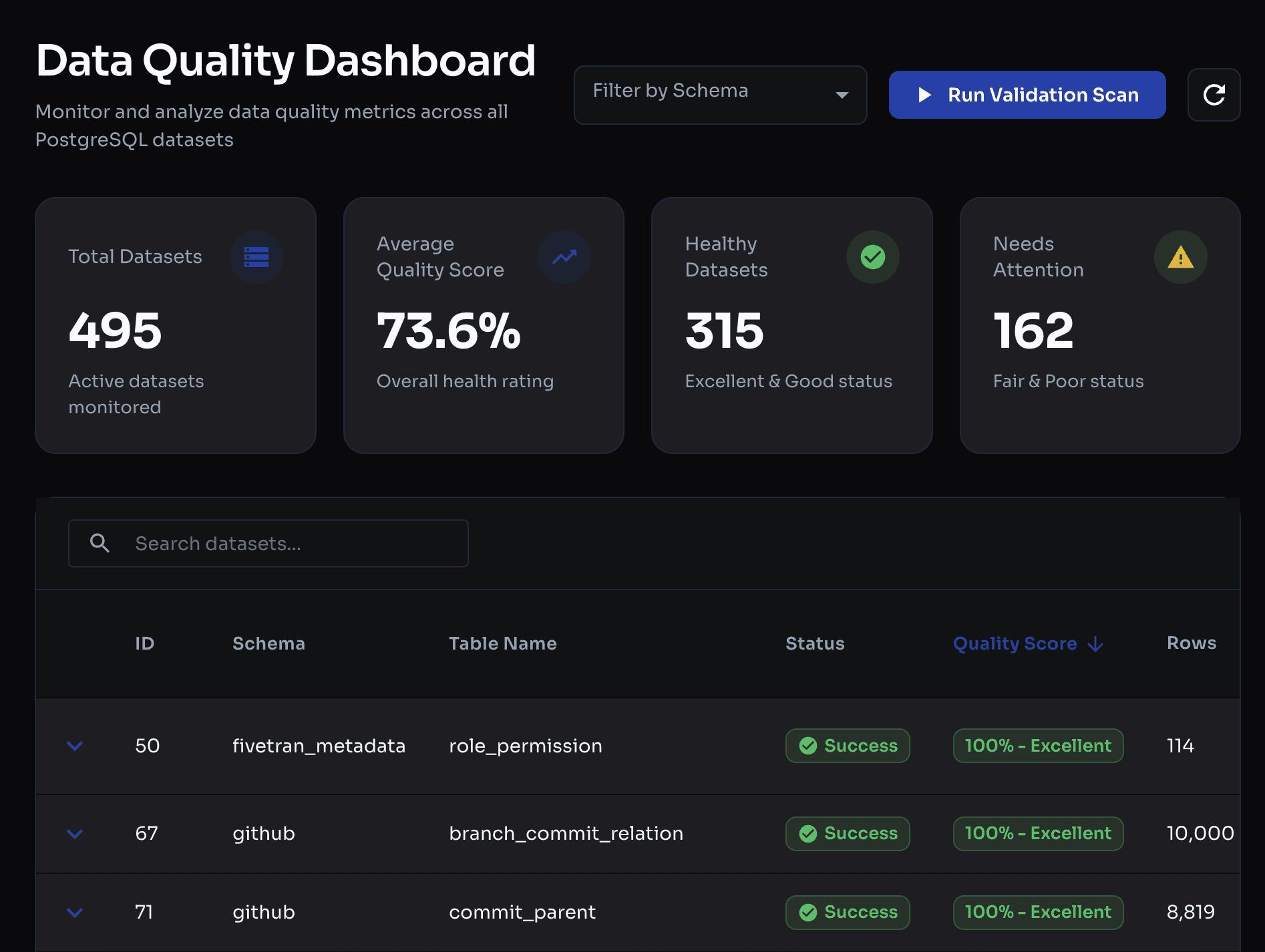
3. Data Quality Scores
Data quality scores provide a summarized view of evaluated data health.
Instead of reviewing multiple indicators separately, users can use an overall score as an initial reference point when assessing their datasets.
4. Schema Insights
Understanding database structures is important for maintaining reliable data workflows.
Data Monitor AI provides schema-related insights that help users examine the structure of their connected data sources.
5. Centralized Dashboard
The platform brings important quality indicators together in a centralized dashboard.
This makes it easier for teams to review database health, understand potential data issues, and access relevant quality information.
Best Practices for Maintaining Data Quality
Implementing a monitoring solution is only one part of a successful data quality strategy.
Organizations should also consider the following practices:
- Establish Data Quality Standards: Define expectations for completeness, consistency, validity, and uniqueness.
- Monitor Important Metrics: Regularly review missing values, duplicate records, and other quality indicators.
- Maintain Schema Awareness: Track database structures and evaluate unexpected changes.
- Validate Data at Different Stages: Examine data during ingestion, transformation, and downstream usage.
- Investigate Issues Early: Prioritize potential data problems based on their impact on business operations.
- Review Data Quality Regularly: Make monitoring part of the organization's ongoing data management practices.
Combining these practices with centralized monitoring can help organizations maintain more reliable data environments.
The Future of Data Quality Monitoring
As data environments become increasingly complex, organizations need better ways to understand and manage their information.
Artificial intelligence and automation are creating opportunities to make data quality assessment more accessible and efficient.
Future data monitoring solutions can evolve toward capabilities such as intelligent anomaly detection, automated issue classification, predictive quality insights, and recommendations for resolving data inconsistencies.
The goal is not simply to collect more data, but to ensure that organizations can understand, trust, and effectively use the data they already have.
Conclusion
Data quality is fundamental to successful analytics, reliable applications, and informed business decisions.
Missing values, duplicate records, schema inconsistencies, and limited database visibility can make it difficult for organizations to maintain trustworthy data environments.
A structured data quality monitoring approach helps teams identify potential issues, understand database health, and improve visibility into their data.
Data Monitor AI brings database connectivity, data health assessment, quality metrics, and schema insights together in one centralized platform.
By making data quality information easier to access and understand, it helps organizations take a more informed approach to building reliable and analytics-ready data foundations.
Ready to gain better visibility into your data health? Explore how Data Monitor AI can support your data quality monitoring journey.
FAQs
Data quality monitoring is the process of evaluating datasets to identify missing values, duplicate records, inconsistencies, and other issues that can affect data reliability.